Table of Contents
Where Desert Meets the Soul of Africa
In the heart of Africa lies Chad, a country of vast horizons and ancient stories. Few places on earth hold such diversity, from the haunting silence of the Sahara Desert to the lush wetlands of Lake Chad, from mountain peaks lost in time to the bustling life of N’Djamena, its resilient capital. Chad is a land that defies expectations. It is wild and poetic, shaped by nature and faith, where every grain of sand tells a story of endurance and beauty.
To travel through Chad is to witness contrast at its most dramatic. In the north, endless seas of golden dunes stretch across the Tibesti Mountains, one of the most remote regions in Africa. In the south, the rhythm of life flows through savannas alive with elephants, antelopes, and lions. And between them, people from over 200 ethnic groups live in harmony with the land, their traditions, songs, and crafts reflecting centuries of survival and connection.
Despite the challenges of geography and history, Chad remains a symbol of authenticity. It has not been polished by tourism or altered for convenience. Here, travelers find the essence of exploration, where landscapes remain raw, where the night sky glows with untouched brilliance, and where every village, oasis, and smile offers a story worth remembering.

The Geography of Extremes
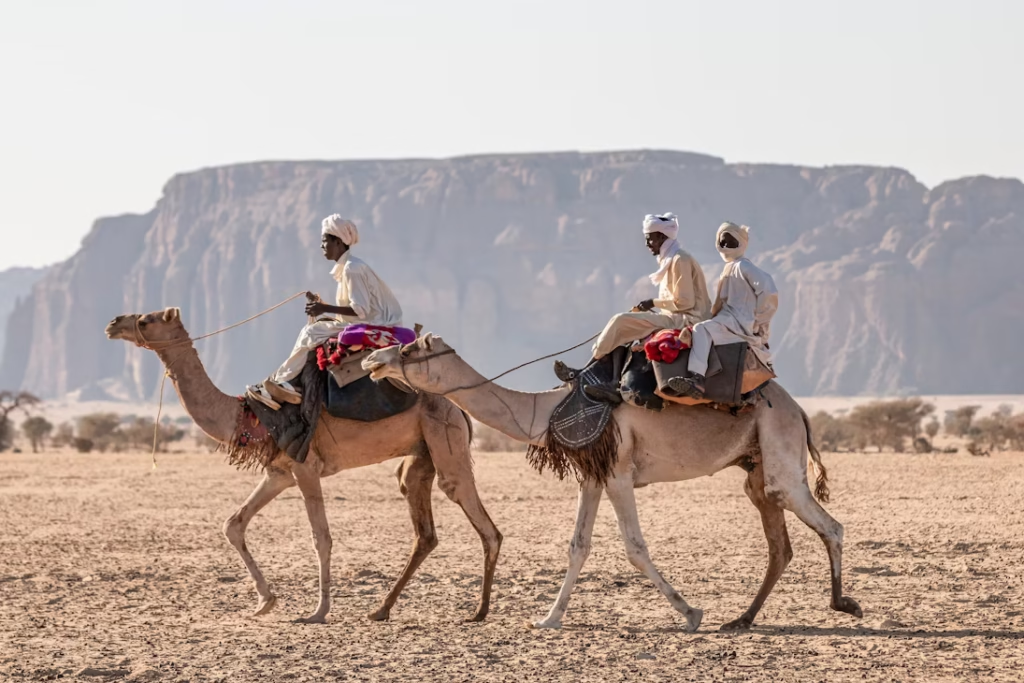
Chad sits at the crossroads of North and Central Africa, a meeting point of the Sahara’s desert heat and the Sahel’s savanna life. Its landscapes are among the most varied on the continent. The Tibesti Mountains rise dramatically in the north, home to Emi Koussi, the highest peak in the Sahara at over 3,400 meters. Volcanic craters and hidden oases mark this ancient land, where nomadic Toubou herders guide their camels along invisible paths passed down through generations.
Toward the center, the land opens into a belt of dry grasslands that shift with the seasons. The south blooms with green vitality, nourished by rivers like the Chari and Logone, which feed into the legendary Lake Chad, once one of the largest freshwater lakes in the world. Though it has receded over the years, it still supports millions of people, serving as a lifeline for fishing, farming, and trade across borders.
Every region feels like a world unto itself. The desert north holds the secrets of prehistoric rock art, silent testimonies of ancient civilizations that flourished thousands of years ago when the Sahara was green. The central plains host herders and traders who move with the rains, and the southern regions pulse with agriculture, dense forests, and colorful markets.
Chad’s geography isn’t merely physical; it shapes identity. To understand its people is to understand how they read the land, the winds, and the seasons.
Echoes of History
Long before modern borders, Chad was a cradle of civilization. Archaeological discoveries in the Saharan Ennedi Plateau reveal rock paintings that date back more than 7,000 years, depicting hunters, animals, and ceremonies, proof that this region was once a fertile world of life and creativity.
By the 9th century, Chad became the heart of powerful African empires such as Kanem-Bornu, which dominated trans-Saharan trade routes for centuries. These empires connected West Africa to North Africa and the Middle East, exchanging gold, salt, and knowledge. Islamic influence grew through these routes, shaping the region’s language, art, and education.
French colonization arrived in the late 19th century, weaving Chad into French Equatorial Africa. Though the colonial period brought roads and institutions, it also altered traditional life. Independence came in 1960, and with it, the long and ongoing effort to build unity across a land of vast diversity.
Chad’s history is one of resilience, of people who adapt, endure, and rebuild. Every generation has faced hardship, but they continue to find strength in community and faith. The nation’s cultural heritage, preserved in oral traditions and ancient crafts, stands as a living record of survival and pride.
People and Culture
Chad’s soul lives in its people, a tapestry of ethnicities, languages, and faiths that together define the nation’s spirit. More than 200 ethnic groups call Chad home, including the Sara, Arab, Toubou, Kanembu, and Hadjerai peoples.
In the north, nomadic tribes traverse the desert with camels, maintaining a rhythm of life that has changed little in centuries. In the south, farmers cultivate millet, sorghum, and cotton in fertile lands. The capital, N’Djamena, reflects this blend of worlds, a city where modern energy and traditional customs coexist in the hum of daily life.
Languages flow like the rivers: Arabic and French are official, but dozens of local tongues are spoken across regions, each carrying unique stories and songs. Music and dance remain essential to communal life, used to celebrate, mourn, and teach. The balafon, drums, and flutes accompany festivals that fill the night with rhythm and unity.
Faith is another unifying force. Islam and Christianity coexist peacefully, often alongside indigenous beliefs that honor the land and ancestors. This spiritual diversity adds depth to Chad’s cultural character, one that values both heritage and hope.

Art, Craft, and Everyday Beauty
Art in Chad is not confined to galleries, it lives in the everyday. In markets, women weave vibrant mats and baskets from reeds. In desert towns, craftsmen carve intricate wooden masks and calabashes etched with geometric beauty. Jewelry made from silver and glass beads glimmers under the African sun, symbolizing not just beauty but identity and history.
Storytelling, both spoken and sung, preserves ancestral wisdom. Tales of spirits, heroes, and creation are passed through generations around the fire. The art of oral tradition remains strong, reminding travelers that here, history breathes through words and melody.
Even fashion carries heritage: flowing boubous, colorful headscarves, and embroidered tunics express not just culture but climate, light fabrics for heat, bold colors for pride. To walk through Chad is to see living art in motion, each person a thread in the nation’s grand tapestry.
The Call of the Wild
Few destinations on Earth capture the raw power of nature like Chad. In the country’s south lies Zakouma National Park, one of Africa’s most remarkable wildlife success stories. Once devastated by poaching, it now thrives as a sanctuary where elephants, lions, giraffes, and buffalo roam freely again. Thanks to conservation partnerships, Zakouma has become a symbol of rebirth, proof that nature, when protected, can heal itself.
Visitors can experience this transformation firsthand. Safari drives at sunrise reveal herds of elephants crossing golden plains and flocks of red-billed queleas painting the sky in motion. The park’s Tinga Camp offers comfortable eco-lodges that allow travelers to fall asleep to the symphony of the African night.
In the northeast, the Ennedi Plateau rises from the desert like a stone cathedral. This UNESCO World Heritage Site is home to dramatic arches, cliffs, and ancient rock art that dates back thousands of years. Travelers who venture here discover petroglyphs depicting cattle, hunters, and dancers, echoes of a time when the Sahara was a fertile land of life. The region feels almost otherworldly: its silence, its vastness, and the surreal beauty of sandstone formations like the Aloba Arch, one of the largest in the world.
To the west, Lake Chad remains the country’s beating heart. Though its size has fluctuated dramatically due to climate change, it continues to sustain millions of people across Chad, Nigeria, Niger, and Cameroon. Fishing villages dot its shores, their wooden pirogues gliding gracefully at dawn. Here, life follows ancient rhythms: casting nets, drying fish in the sun, and gathering at markets where laughter and trade mix with the smell of roasted millet.
Every corner of Chad offers something elemental, a reminder of nature’s ability to both humble and inspire.
Top Attractions and Hidden Gems
- Zakouma National Park: A wildlife refuge where elephants and lions thrive once again. Best visited from December to April during the dry season.
- Ennedi Plateau: A geological wonderland of rock formations, caves, and ancient art, accessible through guided desert expeditions.
- Lake Chad: A living symbol of resilience, supporting fishing communities and migratory birds.
- N’Djamena: The vibrant capital offers a mix of traditional markets, modern cafés, and cultural landmarks like the National Museum of Chad, which houses fossils from prehistoric times.
- Tibesti Mountains: Remote and mysterious, home to Mount Emi Koussi and the nomadic Toubou people.
- Guelta d’Archei: A hidden oasis deep in the Sahara where camels drink from emerald pools guarded by cliffs, one of the Sahara’s most photographed sites.
These destinations are not built for mass tourism but for travelers who crave authenticity, those who prefer the beauty of discovery over the comfort of predictability.
Flavors of Chad
Food in Chad reflects its diversity, simple, flavorful, and tied deeply to the land. Meals are often communal, eaten around a shared bowl that represents unity and equality.
The national dish, boule, is a thick porridge made from millet or sorghum, usually paired with spicy sauces and stewed meat or fish. Along the Chari River, locals prepare daraba, a comforting stew of okra, vegetables, and peanuts. La bouillie, a warm millet porridge sweetened with milk or sugar, is popular for breakfast.
In nomadic regions, camel milk, dried meat, and dates sustain travelers through long journeys. Spices such as chili, ginger, and garlic add vibrancy to the otherwise simple ingredients. Street vendors in N’Djamena sell grilled fish, roasted corn, and sweet fried dough known as beignets, offering a taste of everyday life.
Dining in Chad is more than nourishment; it’s an invitation to slow down, share, and connect.
Traditions, Festivals, and Daily Life
Chad’s calendar is dotted with festivals that celebrate faith, harvest, and heritage. Eid al-Fitr and Eid al-Adha are major Islamic celebrations marked by communal feasts and prayer, while Christian holidays like Christmas bring choirs and church gatherings alive with joy.
Traditional festivals highlight dance and storytelling. In the north, the Gerewol Festival among the Wodaabe people is a spectacular event where men adorn themselves with paint, feathers, and jewelry to compete in beauty and charm. It’s a display of tradition, pride, and poetic romance.
Life in rural Chad follows the sun. Mornings begin with the sound of roosters and the aroma of tea. Markets pulse with energy as traders sell everything from spices to handmade crafts. Children play football in dusty fields, while elders sit under acacia trees discussing the world with patient wisdom. In cities like N’Djamena, modernity blends with custom, smartphones in one hand, prayer beads in the other.

Travel Tips for Chad
Traveling in Chad requires preparation, but the rewards are immense for those who embrace adventure.
- Best Time to Visit: November to April (dry season) for safaris and desert travel.
- Getting There: Most international flights arrive at N’Djamena International Airport, with connections from Paris, Addis Ababa, and Istanbul.
- Transport: Domestic travel often involves 4×4 vehicles; guided tours are recommended for remote areas.
- Currency: Central African CFA franc (XAF). Cash is preferred.
- Language: French and Arabic are official; learning basic greetings in both is appreciated.
- Health: Vaccinations for yellow fever are required; malaria prevention is essential.
- Safety: Always travel with registered guides and stay updated on local advisories.
Travelers who approach Chad with respect, curiosity, and patience often leave with more than memories; they carry stories, friendships, and a deep appreciation for Africa’s untouched soul.
Chad is a paradox: a land of silence and song, of hardship and grace, of desert emptiness and overflowing spirit.
It asks for effort, and in return, it gives something rare and pure.
To stand beneath the stone arches of the Ennedi, to watch elephants roam freely in Zakouma, or to share tea with a stranger beside Lake Chad is to understand what travel truly means: connection, humility, and awe.
For those who dare to go beyond the familiar, Chad is not just a destination; it’s a revelation.
If your heart seeks adventure beyond postcards and resorts, let Chad call you.
Travel responsibly, support local communities, and witness the beauty of Africa in its rawest, most authentic form.
This is not a journey for everyone, but it will stay with you forever.
External Links
- UNESCO World Heritage Centre – Ennedi Plateau
- African Parks – Zakouma National Park
- World Travel & Tourism Council – Chad Profile
FAQs
What is Chad best known for?
Chad is famous for its Sahara landscapes, rock art, wildlife in Zakouma National Park, and the serene beauty of Lake Chad.
What is the best time to visit Chad?
The dry season, from November to April, offers the best conditions for safaris and desert exploration.
How can I reach Chad?
Most travelers arrive via N’Djamena International Airport, with flights from Paris, Istanbul, and Addis Ababa.
Is Chad safe for tourists?
Travel is safest with local guides or tour operators. Southern and central Chad are generally more accessible for tourism.
What languages are spoken?
French and Arabic are official, but many local languages, such as Sara and Kanembu, are also common.
What should I eat in Chad?
Try boule, daraba, grilled fish, and sweet beignets, authentic dishes loved across the country.
What are the top attractions?
Zakouma National Park, Ennedi Plateau, Lake Chad, Tibesti Mountains, and the Guelta d’Archei oasis.
What currency is used?
The Central African CFA franc (XAF).
What is Chad’s climate like?
Hot and dry in the north, tropical in the south, with a short rainy season from May to October.
Are there hotels in Chad?
Yes, accommodations range from eco-lodges in Zakouma to modern hotels in N’Djamena.
What wildlife can I see?
Elephants, lions, giraffes, cheetahs, buffalo, and a rich variety of birdlife.
What souvenirs can I buy?
Handwoven mats, silver jewelry, leather goods, and traditional wooden carvings.
How do locals view tourists?
Visitors who are polite and respectful are warmly welcomed.
What are the must-see places in N’Djamena?
The National Museum, Central Market, and riverside cafés overlooking Cameroon.
Why visit Chad?
Because it’s one of the last frontiers of real adventure, an Africa that still feels timeless and pure.
Discover more from KFMI
Subscribe to get the latest posts sent to your email.


